Malachi Collins
My work

The systems I've built, and what they did.

The software behind a business I ran over the summer, my personal ERP, and two internships in data, reporting and forecasting.

Summer side hustle

Mally's Home Solutions

An exterior home-services business I ran in Fairfield County over the summer of 2026, part-time, alongside a full-time job and school. In under two months it billed $3,345 across 24 jobs. The bigger story is the software: I built my own systems to run it.

$3,345billed, tips included, from July 9 to September 2, 2026
24paid jobs, from bin cleaning to a $1,650 whole-house clean
Summer2026, part-time, alongside a full-time job and school
What the software does

Process management

A written procedure for all 17 services: the kit to bring, then each job step, with a photo for every step.

Customer management

Customers, quotes and follow-ups in one place, so every lead gets a next step and nobody slips through.

Routes and maps

Pickup-day route maps and a door-knock tracker, so a day of driving and selling is planned before I leave.

Data for expansion

46 Connecticut towns scored on income, shopping plazas, prospects and competition to decide where to grow next.

The app
14tools in one app, from jobs and quotes to maps and follow-ups
46Connecticut towns scored to decide where to grow
17services planned out, each with its kit and job steps
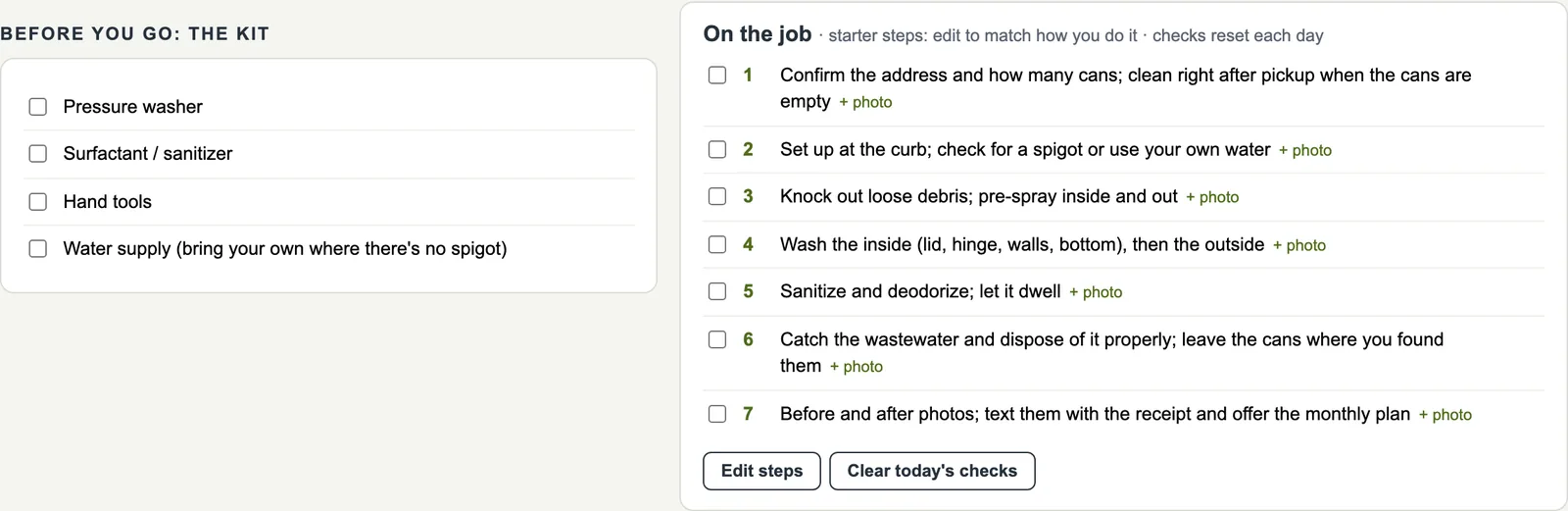
A job procedure in the app: a kit checklist (pressure washer, surfactant, hand tools, water supply) and seven numbered job steps, each with a spot for a photo.
Process management. Every service has a written procedure: the kit to bring, then the job step by step, with a photo for each step.
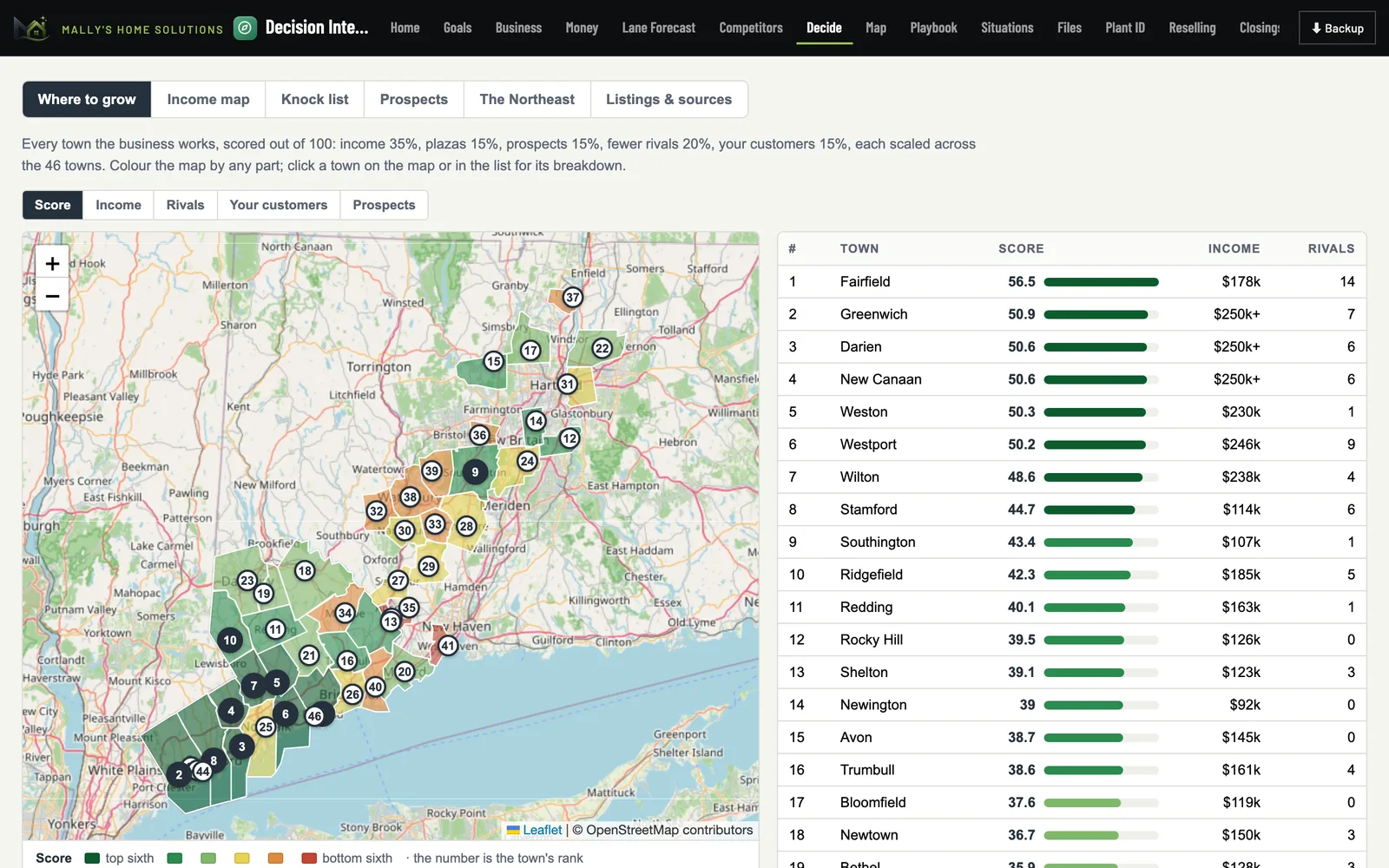
A Connecticut town map colored by score next to a ranked list of towns with income and number of competitors.
Where to grow. Towns scored out of 100 on income, shopping plazas, prospects and competition.
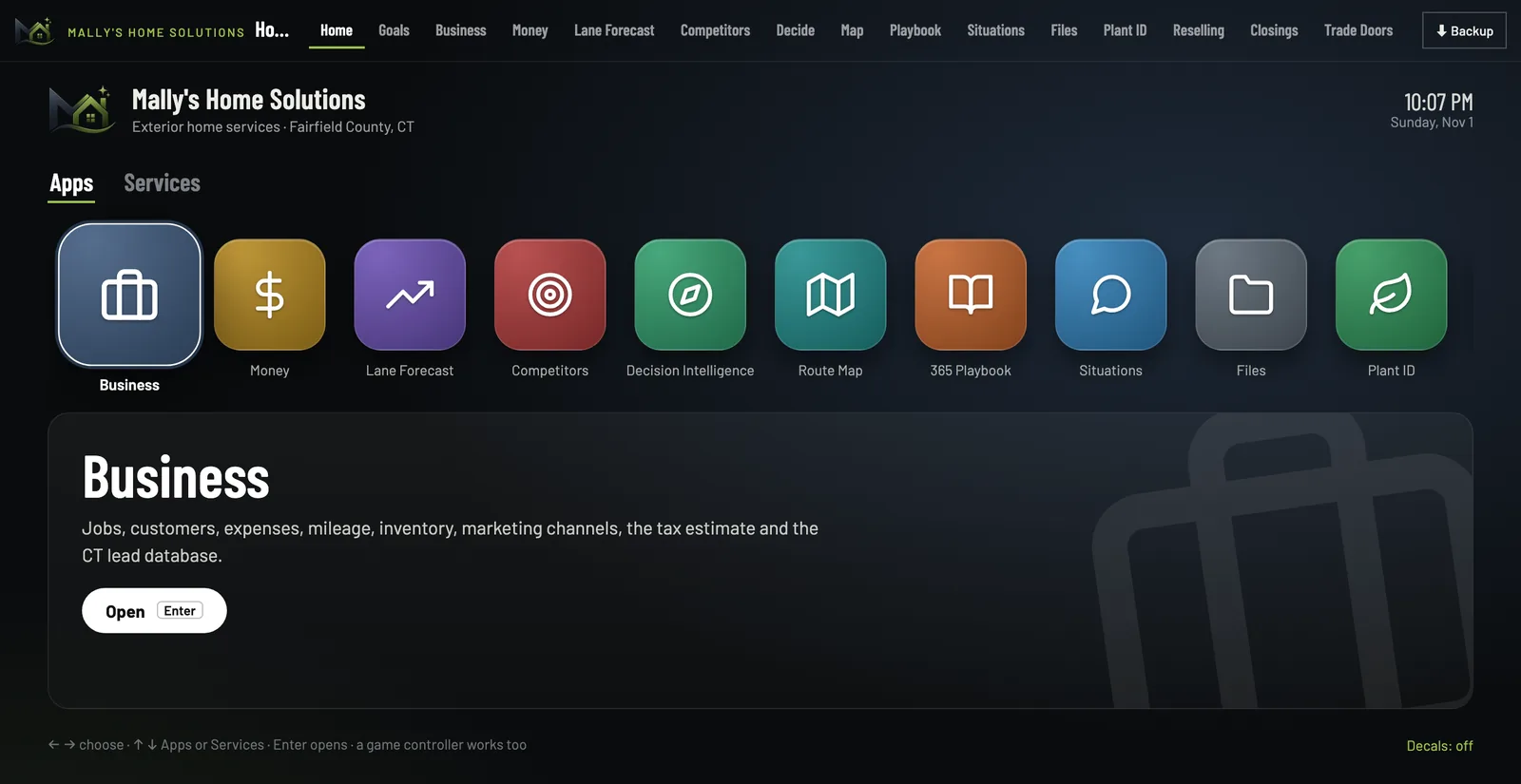
The app's home screen: a row of colored tiles for Business, Money, Lane Forecast, Competitors, Decision Intelligence, Route Map, Playbook, Situations, Files and Plant ID.
Built to feel like an app. Every tool one tap away, like the home screen on a phone. Customer and money details are left out of these pictures.
My personal ERP

FOCUS

Enterprise resource planning, built for one person. Money, plans and requests live in one place, each with its status, and FOCUS forecasts what's coming so I can plan around it. Each app (money, places, business) is a view on the same data.

1
TrackEvery number, by date, with where it came from
2
AnalyzeTrends, averages and the odd day out
3
PredictForecasts with a likely range, checked against what happens
4
Run on its ownSix scheduled jobs: backups, snapshots, forecasts
One database on my own computerEvery change kept, so any of them can be undone. A nightly backup, and a test that proves it restores.
By the numbers
263automated tests run before every saved change
26design decisions written down, each with its reason
139saved changes since it started on Sep 27, 2026
Built with
PythonFastAPISQLiteReactTypeScript
These screens come from FOCUS's demo mode. Every name and number in them is made up.
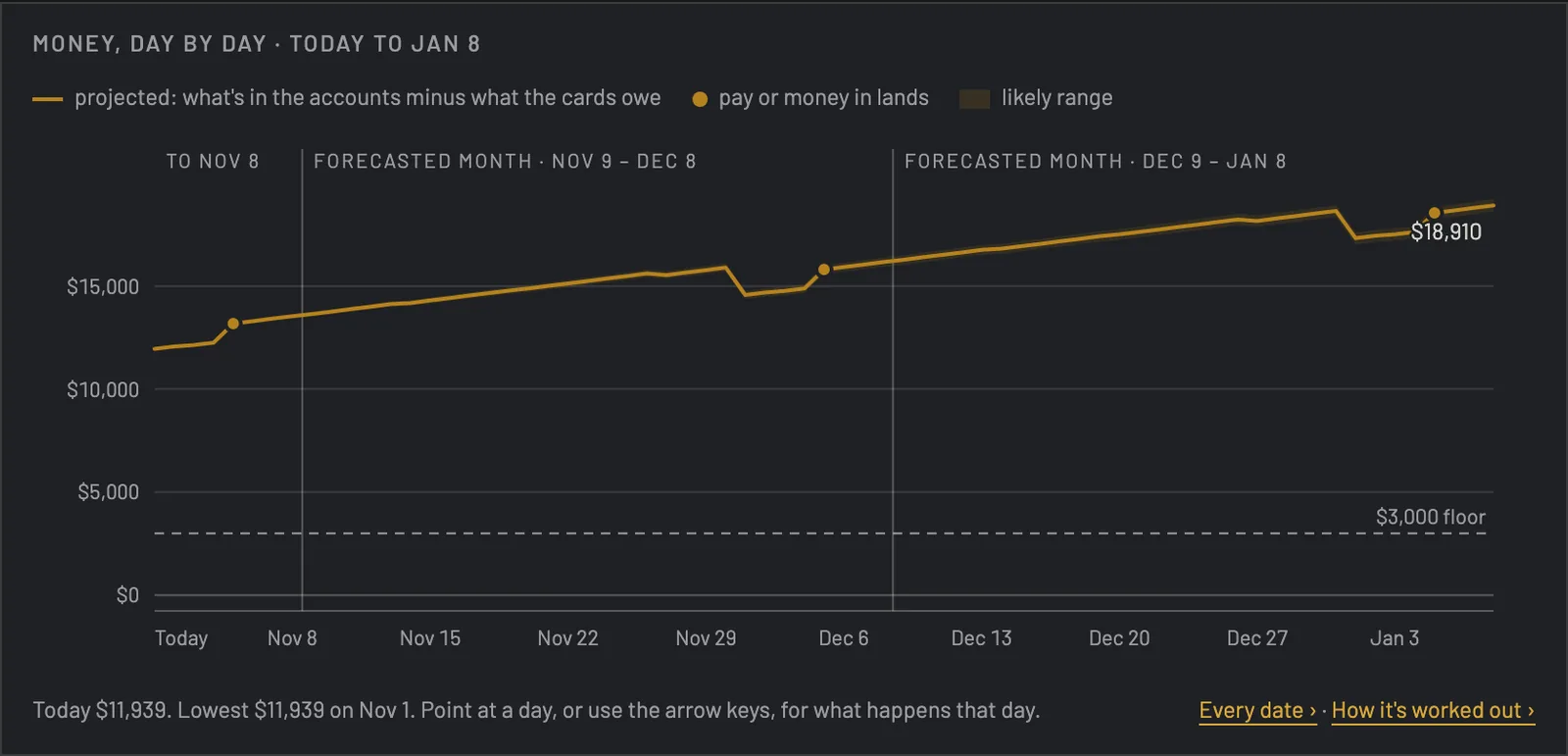
A day-by-day line chart of money from today through January, with the forecasted months marked and a dashed floor line.
Forecasting. The next three months day by day: every bill and payday on its date, with a likely range.
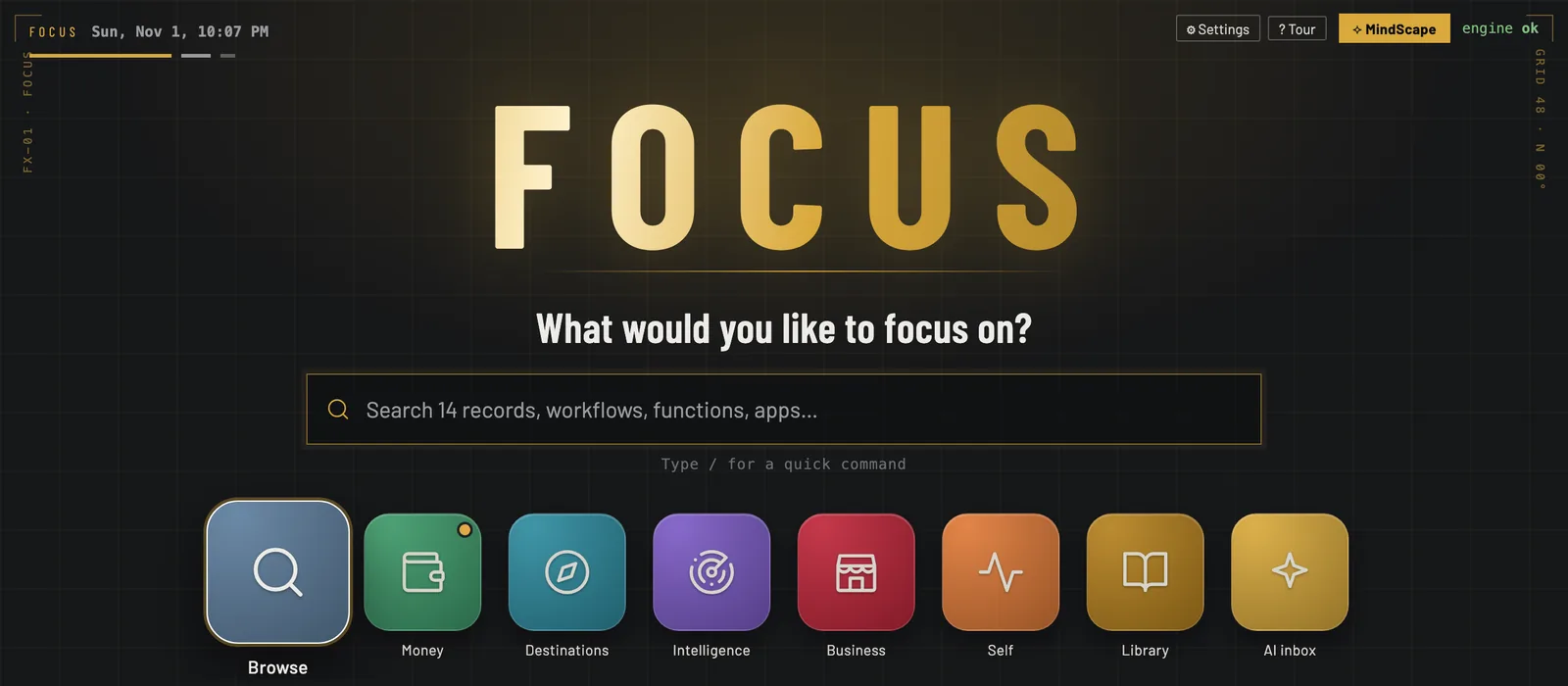
The FOCUS home screen: the word FOCUS, a search box and a row of app tiles.
The front page. One search box for every record, plus a tile for each app.
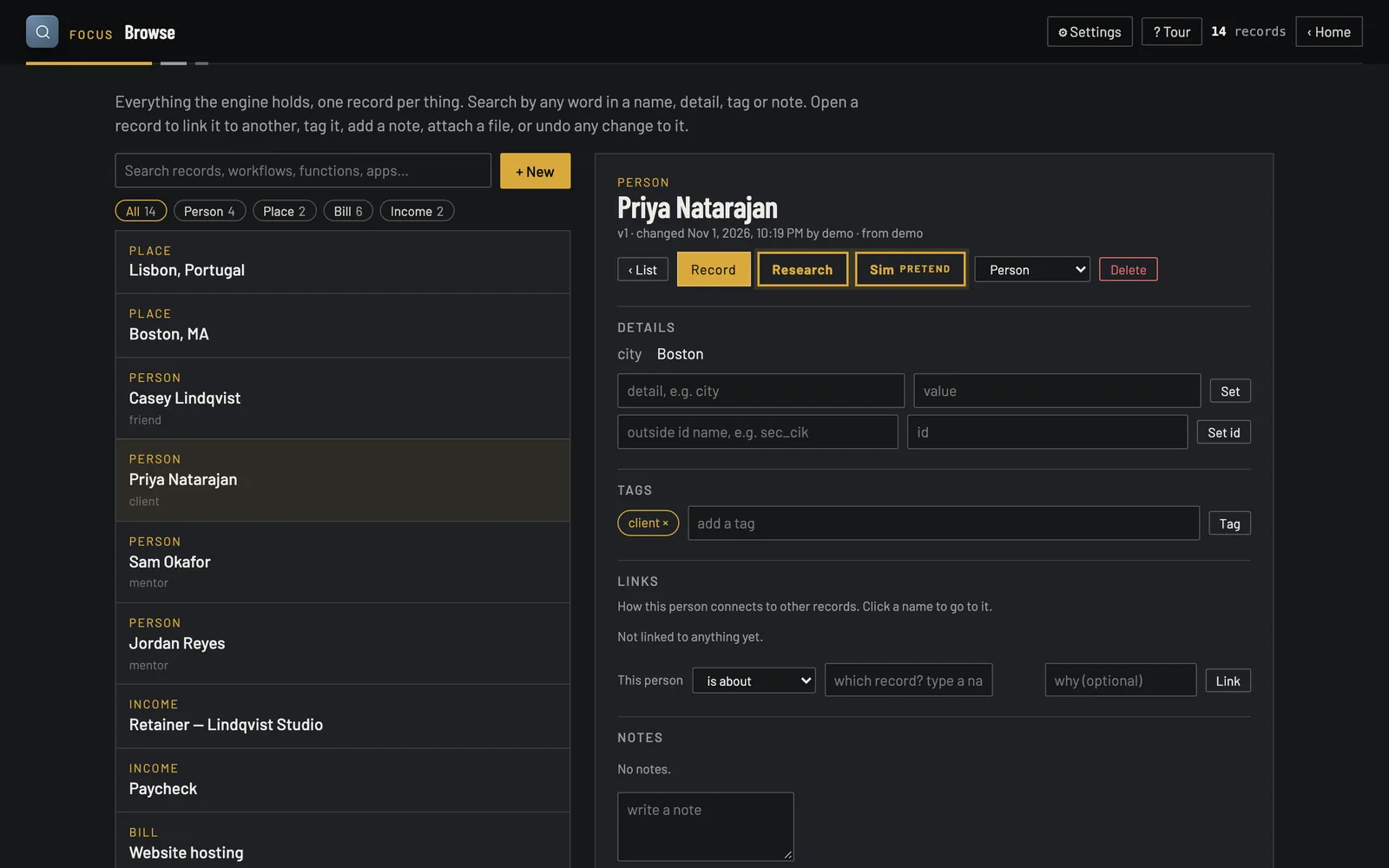
The Browse screen: a list of records on the left and one record open on the right with its details, tags, links and notes.
Records. One record per person, place or bill: link them, tag them, add notes, undo any change.
Internships

Two internships

Data tracking and reporting, analytical tools, training and forecasting. Company work stays with the company, so instead of screenshots, here are mock-ups of the kind of tools I built. Hover the numbers for what each part does.

Leonardo DRS

Jun – Aug 2026
Program management intern · Danbury, CT

Leonardo DRS is a defense technology company. In program management, the question was always the same: is this program on track? I pulled its five key numbers into one view and built price estimates from past jobs.

  • Built a prototype dashboard bringing five focus areas into one view, plus top-level financial models that cut prep time
  • Helped build two pricing-estimate tools from historical data
  • Found inconsistent data in a data warehouse
  • Used AI to turn repeat work into tools
  1. Five numbers, one view. Revenue so far, revenue expected, cash coming in, people on the program and work booked. One screen instead of five reports.
  2. Cash this week and next, so there are no surprises.
  3. Actual vs plan, month by month, so a program running behind shows up early.
  4. Price estimates from history. Enter the hours and materials and get a likely range, based on similar past jobs.

Trumpf

Jan – May 2026
Digital intern · Farmington, CT

Trumpf makes industrial lasers and sheet-metal machines, and trains its customers to run them at its Farmington training center. I worked on the customer side: are companies using the training seats they bought, would pay-per-class customers be better off subscribing, and who's up for renewal?

  • Built a data model behind about $300K in tracked funds
  • Found and fixed inconsistent data moving between Excel, cloud systems and other software
  • Built three Power BI reports for business decisions
  1. The program at a glance. Subscriptions, how many seats get used, renewals coming up and pay-per-class customers.
  2. Seat use by customer. Low use means a company isn't getting value from what it bought, so it's a follow-up before renewal.
  3. Pay-per-class vs subscription. When a company keeps paying class by class and spends more than a subscription costs, it's time to offer one.
  4. Renewals and follow-ups. Who expires soon and who to call, so nothing lapses quietly.
These are mock-ups I drew for this page to show the kind of work. They're not the real tools, and there's no company data in them: every name and number is made up.

Have room for a part-time apprentice?

I'd like to hear from you. Email or call, whichever's easier.

Starts
January 1, 2027
Hours
15–20 a week
Schedule
Set together